|


 When I first started rewilding my property the hardest things for me to leave alone the first couple of years were tall, dead perennial plants sticking up everywhere. I have a lot of late boneset and marsh fleabane close to the house, which are both tall and well pollinated. Once the blooms have gone to seed, they turn into bare brown stalks topped with hundreds of fluffy seed heads. They looked pretty messy to me, but I left them alone.
Winter is not a pretty time for most perennials, but those fluffy seed heads will provide food for birds and other small creatures most of the winter. That first winter I watched hoards of birds perch, feed, and forage among all the tall, gangly stems waving in the breeze. I realized those crowded seeds heads, common with the Asteraceae, or sunflower family, provided loads of protected, persistent seeds throughout winter for birds and other native wildlife. The small seeds are held up off the ground inside |


specialized husks, stored in a way that allows them to dry after rain and stand high above any snow, ice, or fallen leaves. Squirrels and other rodents tend to leave them alone, unless they fall over. Those dried up plants became perfect winter bird feeders. Go figure. They do not have to be disinfected and loaded with expensive seed all season. We just need to leave them alone to do the job nature designed them to do. Native plants understand the assignment and store up food all season. When we remove these plants, even to compost them, we have thrown out a critical resource for our wintering animals. As we lose more and more native habitat to development, it becomes more important to allow wild areas to exist and provide these important resources.
Even in death trees keep providing nutrients and shelter in a habitat. Fungi quickly moves in and turns the woody debris into nutrients and organic matter, enriching the soil. Once all the seed heads are bare, I usually leave the remaining stems until Spring, especially if the stem is hollow. Quite a few of our native bees nest in hollow-stemmed perennial plants. If we burn, bag, or compost those stems, we destroy the next generation of developing pupa from our local native pollinators. Many of our ~ 145 different species of native North Texas bees are solitary and count on having hollow plant stems and woody cavities to provide nesting areas and shelter during winter. Some of these bees are tiny, so I leave all the undergrowth untouched until the night time temperatures warm into the 50’s for a week or more. This gives all the over-wintering larvae and insects a chance to develop and vacate. Most of the time the tall stems fall over by themselves before the weather warms up as our early spring storms move in. Nature has a way of taking care of itself by cycling nutrients and resources through the habitat, as needed. Everything takes its turn. As new plants pop up in spring, the spent plants quickly return to the soil to feed the next season’s progeny. The same thing happens with downed trees and limbs. Most of us remove a fallen tree as soon as possible from our property. We do not stop to think about all the carbon and other nutrients that are stored in that tree. It is not trash. If we haul it off, we have just removed years of stored resources from the habitat. If we burn the tree we release all that carbon into the air to be carried off by the wind. But, if we can find a place to allow that tree to decompose on site, slowly, that stored carbon is returned to the soil ecosystem, which is struggling with modern landscaping practice. As an example: an average oak tree weighs somewhere between 8,000 to 20,000 pounds, depending on its shape, size, and trunk dimension. About half that mass is water. If a 10,000-pound oak tree died and fell over, about 5,000 pounds would be the dry weight of wood. Of that 5,000 pounds around half the mass would come from elemental carbon. That means hauling off the wood of that small oak tree removed ~2,500 pounds of carbon from the habitat that could have slowly been returned to the soil! Fertilizer doesn’t add carbon like decaying plant material does. Giving that carbon back to the soil enriches all the important microorganisms that keep the habitat healthy. We are all carbon life forms, including the soil biota! Trees rapidly decay in a healthy ecosystem, returning nutrients to the soil. This the base of a fallen weeping willow tree is making good progress. Quite a few insects and small animals use it as shelter. The other photo is a rather small, but aggressive, fungi, the splitgill mushroom (Schizophyllum commune), breaking down a persimmon branch. Within months it will be soft and spongy enough to work into the soil. I prefer to leave what I can as close to where it fell as possible, even if it isn’t the most attractive thing in the yard. The fungi, plants, and animals that benefit from the release of all those stored nutrients are worth the messiness. Besides being a carbon storage system, fallen trees, upright snags, and large branches offer important habitat for many small creatures. Instead of burning or hauling off branches, I began making small brush piles along the edges of the overgrown areas. They instantly filled up with all manner of small native wildlife. Lizards, toads, mice, rabbits, and many other animals count on having sheltered areas where they can be safe and rest. Ground nesting bees often excavate under woody debris and leaves, as it helps protect and insulate their underground nest. A small brush pile makes an ideal safe space. Small birds love to forage among the upper branches. Larger trees provide hollow cavities for numerous species of birds and other animals. Removing this biomass stresses the habitat. Leaving it builds soil. Fungi quickly move in to breakdown woody debris. If you are lucky, some of them may be delicious on top of being useful! One of my cottonwood snags rewards me with pounds of fresh oyster mushrooms (Pleurotus ostreatus) several times a year. Never eat wild mushrooms unless you are positive you know the species! Although I have several different mushroom species on the property, these are the only ones I have foraged so far. There are a few plants still on my fall clean up list. The top three slated for destruction are privet (Ligustrum spp.), Bradford pear (aka Callery pear, Pyrus calleryana), and heartleaf peppervine (Ampelopsis cordata). The first two are invasive species, so I try to remove them any time I see them. They can be sneaky, though. Winter is the perfect time to take out privet. It is evergreen and becomes easier to see when everything around it turns gray and brown. Bradford pear will be one of the first bloomers in spring. It is beautiful, but its flowers stink, and it has become highly invasive. Both of these problem species will resprout from the root system, so it is often necessary to use some sort of herbicide in a fresh cut to prevent them from sending up shoots.
If you see one of these on your property, kill it with fire!!! Here is a privet I cut down last year. It came back with a vengeance this year. Unfortunately, killing privet and Bradford pears usually requires careful application of a herbacide. Heartleaf peppervine was introduced in the Sticker Hill rewilding series. I was on the fence (literally), but have decided to remove most of it. Bees loved the flowers, so I was letting it grow, even though it was aggressive. I have decided there are better natives, such as small-leaved peppervine (Nekemias arborea), that do the same basic job in the habitat. Not many animals prefer the heartleaf peppervine fruits, so it spreads everywhere. The smaller leaved peppervine is not as aggressive and the berries are stripped rapidly as they mature. Plus, it’s small leaves and multicolored fruits make it an attractive vine most of the year. |


Peppervine ((Nekemias arborea) and Heartleaf peppervine (Ampelopsis cordata). Both plants are native to Grayson County, but the heartleaf vine is extremely aggressive!
Hopefully this article will give you an excuse to put off that big cleanup this year. Enjoy the cooler fall weather and take a walk around your place. Are there spaces that can be left to nature? If so, watch and see what happens. You may be pleasantly surprised and find yourself resting in winter, too. And remember, those leaves are not going to break into your house and drink your wine. They will be busy breaking down into new soil to feed all your plants this Spring!
Refuge Update: Though refuge lands are open from sunrise until sunset every day of the year, the Visitor Center is open Monday through Saturday 9-4, Sunday 1-5. It's a great time to visit the refuge! The Good Unit (Haller's Haven Trail) and Meadow Pond Trail south of the Railroad tracks are closed this weekend for a youth archery deer and feral hog hunt. |

Our next festival will be on Saturday, May 8th, Save the Date! Thank you, Nelda Zamir and Lea Watson for these amazing photos! |
|
Upcoming Activities:
The Friends of Hagerman is Hosting 8 Family Friendly Events in November! Donate to help fund programs like these! |
|
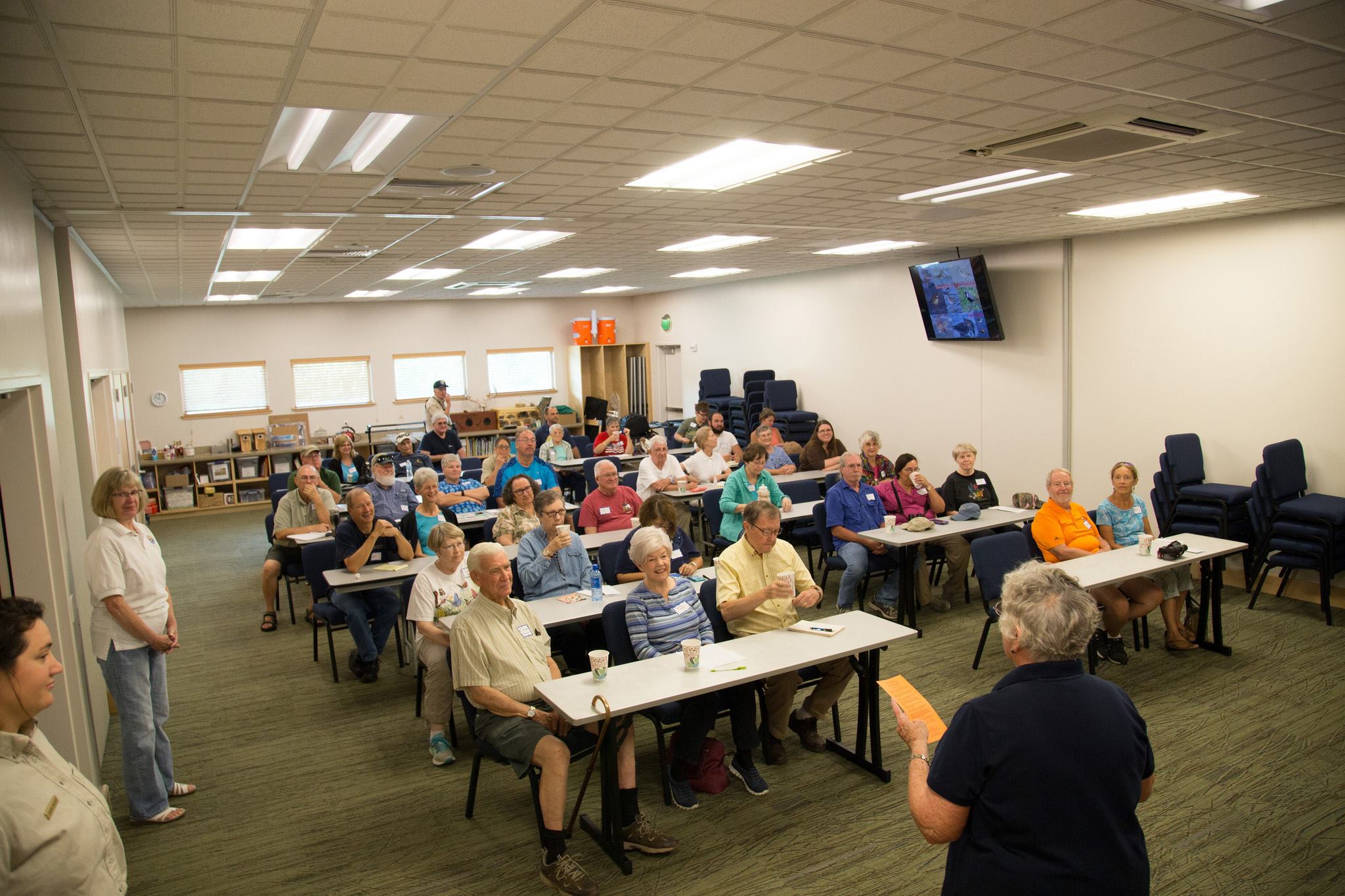
Second Saturday Presentation Eternal Bois d’Arc: Dinosaurs Tempered It, Caddo Nation Tamed It and America Built On It Presented by John Baecht of Bois D'Arc Kingdom Saturday, November 14th, at 10:00 AM in the Visitor Center
Join John Baecht of Bois d’Arc Kingdom to explore these remarkable trees—once a food source for Columbian mammoths, which reached up to 9 tons, and giant ground sloths, weighing around 2 tons. As these bus-sized animals climbed, pushed, and snapped branches to reach the fruit, the tree adapted to withstand immense pressure. Today, Bois d’Arc is one of the strongest, most elastic, and most rot-resistant woods in North America—a living legacy of its prehistoric past. The natural range of Bois d’Arc shrank dramatically during the advancing ice age. After the ice retreated, the tree found a refuge in the Red River Valley of present-day Texas and Oklahoma. There, the Caddo Nation developed a thriving trade network, exchanging Bois d’Arc wood—especially prized for bows—across vast distances, reaching as far as the Great Lakes region. These bows were so valuable that they were often worth more than a horse. As settlers moved into North Texas, they encountered dense groves of Bois d’Arc along creeks and rivers, sometimes making passage difficult. Wagon makers in towns like Bonham quickly recognized the value of this durable wood, crafting long-lasting wagons from it. During the hedge-planting boom of the 1850s, Bois d’Arc seeds became extremely valuable—at times even compared to gold by weight—because the trees were widely used for living fences. With the arrival of barbed wire, Bois d’Arc became the preferred material for fence posts due to its remarkable resistance to rot. It played a key role in shaping agriculture and settlement across the region. For decades, its wood was also used in structural supports for buildings throughout Texas. Bois d’Arc—known scientifically as Maclura pomifera—continues to attract interest today. Its oils contain powerful antioxidants, and researchers are studying its potential benefits for health and medicine. After the presentation, the photo club contest winners will be announced. Don't miss these amazing photos! Future Second Saturday Programs |

|
|
The perfect Christmas gift for the birder in your family:
The Adopt-A-Nestbox Sale Is On Now! Each year, the Friends of Hagerman invite the public to support the Eastern Bluebird population through our Adopt-A-Nestbox Program. By adopting a nestbox, you’ll help protect these beloved birds and enjoy a front-row seat to their nesting journey. Throughout the nesting season, nestbox sponsors and their gift recipients receive weekly email updates featuring a photo from inside their nestbox and news of the birds’ progress—from the first twig to the day the young birds take flight. |
|

As an adopter, you’ll have the opportunity to name your nestbox and visit it with your loved ones anytime along the easily accessible Raasch or Harris Creek hiking trails. A nestbox adoption makes a wonderful and meaningful Christmas gift! |
|
|


A $50 donation per nestbox supports the care and maintenance of our impressive Bluebird Trail, which includes 45 nestboxes throughout the refuge. Join us in helping Eastern Bluebirds thrive! |
Christmas Art Sale in the Nature Nook Back by popular demand, the Christmas Art Glass display will return for a second year at Hagerman National Wildlife Refuge’s October Round Up. Refuge volunteers create the art using mostly recycled glass, transforming it into colorful Christmas pictures, ornaments, and cards. The display reflects the creativity and craftsmanship of our volunteers and offers a unique glimpse into how discarded materials can be given new life. It will be one of the special features of this day-long celebration of the Refuge, alongside bird watching, nature lectures, and other activities. |
A Senior Visit to the Refuge
A heartfelt thank you to the Gujarati Senior Society of Plano for making the trip up to visit us at Hagerman National Wildlife Refuge!
Sharing the beauty of the prairie and our local wildlife with such a wonderful community group is exactly why we do what we do. We are also incredibly grateful for your generous donation. Your support directly helps fund our ongoing conservation and educational efforts, ensuring the refuge remains a vibrant place for both the wildlife and our visitors.
It was an absolute joy having you out exploring the refuge, and we are already looking forward to welcoming you back for another visit in the future!
Contact Us via email at info@friendsofhagerman.org to plan an outing for your group.
The Weekly Bird Census
The Bird Census Team Each Tuesday a team of experienced birders, including Master Naturalist Jack Chiles, traverse 35 miles of refuge roads and hiking trails, documenting every bird they encounter. This Bird Census is reported to The Cornell Lab of Ornithology for use in research, and each week we will bring you a link to their actual bird count, and a summary of their adventures.
Male American Kestrel with a dragonfly and Ruddy Ducks It was a very still, pleasant morning, for today's census. Water has been added to most of the marshes and more ducks are arriving every day. Diving ducks are arriving with 10 Ruddy Ducks counted today. Blue-winged Teals are still present and Green-winged Teals are continuing to arrive. We also saw Northern Shovelers, Northern Pintails, Wood Ducks, Gadwalls, Mallards and American Wigeons. In the trees by the gate at the entrance to Haller Haven trail we saw a Blue-headed Vireo, a couple of Golden-crowned Kinglets, Yellow-rumped Warblers and a Brown Creeper. Hermit Thrushes have arrived, We counted 19 Blue Jays today. We saw 255 Canada Geese. We saw a flock of 7 Wild Turkeys near the entrance to Harris Creek trail. Western Meadowlarks have arrived, joining the resident Eastern Meadowlarks. We had a count of 79 species. See the rest of Jack's notes and the latest Bird Census Results |

The Friends of Hagerman NWR Photo Club Meeting: History of Hagerman NWR Saturday, November 7, 2026 at 10:00 AM in the Visitor Center
Step back in time with Mary Istre, Deputy Refuge Manager, as she explores 80 years of conservation at Hagerman NWR. Using historic photographs and engaging stories, Mary will bring to life the people, decisions, and defining moments that shaped the refuge’s landscapes and wildlife. You’ll also discover how lessons from the past continue to guide conservation efforts today—and why this history matters more than ever. Event Leader: Nancy Miller photoclub@friendsofhagerman.org Photo Contest winners will be announced after the Second Saturday Program on Saturday, November 14, 2026 |

| Puddles' Craft Corner By Cindy Steele, Master Naturalist |

Creatures of the Night!

Welcome back to Puddles’ Craft Corner! Imagine being wide awake at midnight and going through your normal day. Can you imagine eating lunch at midnight, going to school, playing with your friends, and talking to your family? That might seem odd to some of us, but to nocturnal animals, that's how they live their lives. Nocturnal animals are awake and active at night and then sleep during the day. Some nocturnal animals can be seen during the day, but most of them spend their whole day resting. Examples of nocturnal animals include bats, skunks, aardvarks, raccoons, opossum, and owls.
Nocturnal animals sleep during the day for various reasons. Most nocturnal animals sleep during the day and are active at night in order to avoid predators that are active during the day. For example, sea turtles go to their breeding sites in order to keep themselves safe and protect their offspring. Most nocturnal animals live in the desert or hot areas. So, not only are they trying to stay away from predators, they're also staying out of the hot sun during the day. Now, let’s learn a little bit about these creatures of the night and make a fun nocturnal animal craft! What Exactly Does Nocturnal and Diurnal Mean? Diurnal Diurnal is a term that describes an animal that is awake or active during the day. Some common diurnal animals are horses, cows, goats, dogs, ducks, and…You!
Nocturnal Nocturnal animals are awake and active at night and then sleep during the day. Some nocturnal animals can be seen during the day, but most of them spend their whole day resting. Examples of nocturnal animals include bats, skunks, raccoons, opossum, and owls. There’s a reason why people who stay up late are called night owls. That’s because owls are always awake and active when the sun is down. This is called nocturnal behavior, and it’s common among many animals. They become more active at night to hunt, mate, or avoid heat and predators.
Special Adaptations
Think about what it's like for you to go outside at night without a flashlight or streetlights to help you see. It can be quite hard. Well, animals that are awake during the dark hours of the night have highly developed senses, which make their bodies unique. Many nocturnal animals have special eye cells called rods.
These rods help them capture more light when it’s dark. This is a special type of night vision! Additionally, the sense of smell is something nocturnal animals use as a way to track other animals’ scents or to find food. The aardvark can hear and smell insects walking along the ground. That is some great hearing! They also use their ears to hear their prey or other animals they may eat. Some nocturnal animals, such as bats, use what is called echolocation to see their environment with their ears. This means that bats make a high-pitched sound that bounces off nearby objects and comes back to them. They use this to help them...
|
|
Other Crafts with Puddles
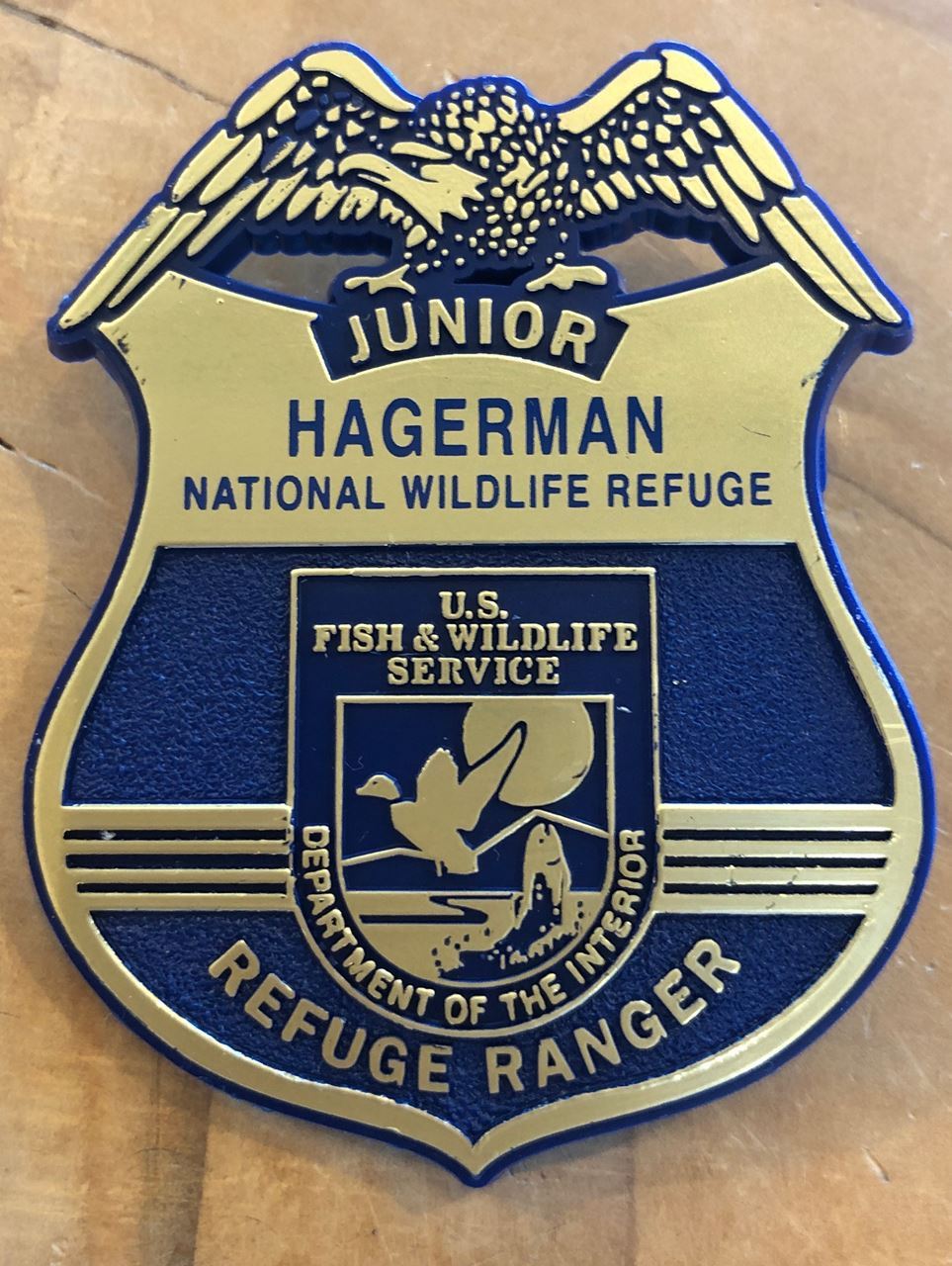
Junior Ranger Program: Advanced and Intermediate
|
| The Junior Ranger Pledge As a Junior Ranger I watch out for danger I protect nature I have fun I share what I've learned with everyone! |
|
Sponsors Enable the Friends to…
Join Today! Memberships available for $20 |
Come, Take a Tour on the Wildlife Explorer! Come join us for a ride on the Wildlife Explorer! Our new and beautiful tram is available for ninety-minute tours of Hagerman every Saturday and Sunday at 2:00 PM, weather permitting. Our tours are as varied as our drivers. Each tram driver has her/his approach to the tour: you may learn about wildlife, birds, habitat, refuge history, photography, you name it! To paraphrase, “a Wildlife Explorer tour at Hagerman is like a box of chocolates, you never know what you’re going to get.” But you know it’s going to be good! Come see us! Lots of stops for bird-watching and photography.
Register for a Tram Tour Today! |

Photo by Cathy Van Bebber | Photo by Jack Chiles |
Meet Jack and the Bird Census Team and learn how to identify the birds of North Texas while enjoying the beautiful sunrise over Lake Texoma! Modeled after Cornell's national "Big Sit" event, a group of dedicated birders invite you to join them at sunrise to conduct a bird count as multiple species fly to the water and the surrounding land to feed. Leaders will bring spotting scopes and will provide tips for identification of the many species you will see.
Participants are advised to bring a chair, binoculars and water. The First Saturday of every month, beginning 30 minutes before sunrise. Location: H Pad, Sadler, Texas 76264 (H Pad is in Sadler, but it is part of the refuge) GPS Coordinates: 33.734961, -96.780582
|
|
Early Bird Walk |
Dr. Wayne Meyer, Ornithologist and Jack Chiles, Master Naturalist will lead our Early Birding event, weather permitting. Bring binoculars or borrow ours. Meet at the Visitor Center and return in time for the Second Saturday program. |

Please Register (Optional) so we may inform you via email of unforseen changes/cancellations.
|

Do You Like to Work Outside? The Refuge Needs You!
|

It takes a lot of people to have a beautiful garden! The Wednesday Garden Team Love to work with native plants and meet other gardeners? Come and help us add plants, weed and mulch our beautiful butterfly garden. Garden Team volunteers get first dibs on thinned native plants as well as access to seeds and cuttings for propagation. Gardeners meet on most Wednesdays, but times vary. Contact Us to subscribe to the volunteer garden team weekly email. Provide own tools and gloves. Minimum age 18, or 16 if accompanied by parent/volunteer. |
Mowing and Refuge Beautification: The Work Crew Do you enjoy working outside, mowing, sprucing up hiking trails, trimming and removing brush and general cleanup? Show your love for nature by joining the Outdoor Crew at Hagerman National Wildlife Refuge. Outdoor Crew volunteers meet on the First Tuesday and Fourth Saturday of every month. Clean Up Event: Saturday, November 21st, at 8:00 AM, Meet at the Visitor Center. Contact Us for exact times, dates and other details about joining the volunteer Work Crew. Scouts welcome! |
Visitor Center Volunteers Needed! |
Do you enjoy meeting all kinds of people from all over the world, and like-minded people in our area? If yes, consider joining our team of Visitor Center Volunteers. You will greet refuge guests, distribute maps and other refuge information, and make sales in the gift shop. Shifts available every day of the week: Monday through Saturday 9 AM to 12:30 PM and 12:30 to 4:00 PM, Sunday 1:00 to 5:00 PM. Training is provided. Contact Us if interested. |
|
| Thank You To Our Contributors: Jack Chiles, Karen Glenn, Cindy Steele, Lea Watson, Nelda Zamir Refuge Manager: Kathy Whaley Deputy Refuge Manager: Mary Istre Visitor Services Manager: Spencer Beard Friends of Hagerman NWR Foundation 6465 Refuge Road, Sherman, TX 75092 Phone: 903-786-2826 Join us on Facebook: |

Search for any word--do not use quotes for phrases |
6465 Refuge Road Sherman, TX 75092
|



Kroger: Stop by the customer service desk at Kroger and link your Kroger Card to the Friends of Hagerman: the Friends will get rewards for every dollar you spend, at no cost to you.
Please add info@friendsofhagerman.org to your contacts to ensure delivery of registration confirmations, account information and the Featherless Flyer
See you at the refuge!