Upland Game Hunt: September 1 to 30, 2026, Click for a map of affected areas. |
|

A What?
By Kathy Whaley, Refuge Manager

In December, an archery deer hunter stopped by my office to chat and one thing he said was “you sure have a lot of twig girdlers this year”. I said, “We have a lot of what”? “Twig girdlers” he repeated. My next question was what the heck is that? He gave me a puzzled look as if to say you have got to be kidding me! I assured him I was not and that I had never heard of it. I decided to go online to find out more about this mysterious creature that was wreaking havoc on refuge trees. If I had not heard of it, surely others had not either.
Twig girdlers (Oncideres spp.) are members of the longhorn beetle family-a very large group with more than 26,000 named species. They are 1/2 to 3/4 inch long, grayish brown in color with a lighter gray band across the back, and antennae at least as long as the body. As is apparent in the photo, twig girdlers are aptly named. The beetle is well known for causing extensive damage to many trees, especially pecan, oak, hickory, and elm. Adults typically appear from late summer though fall. After mating, females select a host tree where she “girdles” small branches (usually ½ inch or less) with her chewing mouthparts, cutting through the bark and into the softer layer of wood. However, the female girdler is careful not to completely sever the branch from the tree, leaving it connected by a center portion of the heartwood. Traveling the length of the girdled branch, the female bites a notch in the bark with the mandibles, deposits an egg in the notch and covers it with a protective secretion (each female deposits a total of 50-200 eggs). Eventually, the girdled branch is bent down or broken off by the weight of the limb or by wind. In a heavy infestation, it is not uncommon for the ground under impacted trees to be literally covered with girdled branches. After seven days and regardless of whether the twig is on the tree or the ground, the eggs hatch into larvae that tunnel underneath the bark where they eat and grow through stages for several months. Pupation lasts 12-14 days and occurs during late summer. Once ready, the adult chews a circular hole in the | Second Saturday: Waterfowl with Dr. Meyer Field Trips Apply Now for Spring! |

bark to emerge. The life cycle is completed in a year and the adults live for 6-10 weeks. |
If you see small limbs in your yard, maybe it was due to the wind, a squirrel, or a bird. Look for the telltale sign of the twig girdler to rule it out (or confirm you have them). Fortunately, these insects typically do not cause serious harm to trees and are mostly a nuisance. However, they can cause significant damage in pecan orchards and nurseries where, if left unchecked, they can reproduce in high enough numbers to decimate the affected trees. Spraying with a chemical insecticide is not recommended for controlling twig girdlers in a yard situation. Instead, collect and burn dead twigs during the winter.

|
Upcoming Activities:
The Friends of Hagerman is Hosting 16 Family Friendly Events in January! |
|
Second Saturday: Waterfowl with Dr. Wayne Meyer Saturday, January 10th 10:00 AM in the Visitor Center
Photo by Adam Graham As winter nears, the waterfowl for which Hagerman NWR was originally established are moving. In this presentation, you'll learn about all the geese and ducks that visit our refuge and why they come. Dr. Wayne Meyer, an ornithologist, began birding at the age of 13 in Connecticut. He has birded extensively on both coasts of the United States and has spent the past quarter century birding in Texas and Oklahoma. Dr. Meyer has conducted extensive research on prairie birds and has been studying song learning and vocal development in Painted Buntings for more than a decade. He is a sought-after speaker for Master Naturalist groups and a frequent presenter at the Friends of Hagerman National Wildlife Refuge Second Saturday programs. Don't miss the Early Bird Walk before the program! |

Free Field Trips for Schools and Youth Groups Now accepting applications for the Spring Semester! Enjoy a fun-filled day of learning about nature, at the refuge or in your classroom. Our knowledgeable volunteers—with over 100 years of combined teaching experience— will take your students on a hike through prairie, pond, forest and riparian ecosystems. Along the way, we’ll compare the habitats we encounter and help students identify bird songs, animal tracks, native plants, and other interesting discoveries. Next, we'll visit Hagerman’s ¼ acre pollinator garden and teach the students how to use insect binoculars. We’ll set them loose to explore, giving them a chance to get a close-up look at live butterflies, bugs, spider egg sacs, chrysalises, and whatever else they can find! We’ll wrap up by connecting their observations to TEKS concepts such as life cycles and the functions of organisms. View TEKS aligned lesson plans and Apply for a Field Trip today! |
The Weekly Bird Census
Left to Right: Wayne Meyer, Nancy Riggs, Jack Chiles, and Mike Petrick Each Tuesday a team of experienced birders, including Master Naturalist Jack Chiles, traverse 35 miles of refuge roads and hiking trails, documenting every bird they encounter. This Bird Census is reported to The Cornell Lab of Ornithology for use in research, and each week we will bring you a link to their actual bird count, and a summary of their adventures.
Loggerhead Shrike, Pileated Woodpecker and Red-shouldered Hawk It was a nice calm day for the census, with the temperature starting out in the lower twenties. There was a lot of bird activity today. White geese numbers are still near 8000 but there is not much wheat left on the refuge. Duck numbers are good but seem to be down some from last year. Ducks counted included 55 Northern Shovelers, 137 Gadwalls, 16 American Wigeons, 108 Mallards, 160 Northern Pintails, 311 Green-winged Teal, 3 Ring-necked Ducks, 16 Buffleheads, 10 Ruddy Ducks and 240 unidentified duck species. We saw a fly by Crested Caracara near Short Road. We had a high number of 16 Red-shouldered Hawks. We saw a couple of Red-breasted Nuthatches and a White-breasted Nuthatch. We saw 11 species of sparrows. Woodpecker numbers were good, with 1 Yellow-bellied Sapsucker, 14 Red-bellied Woodpeckers, 4 Downy Woodpeckers, 3 Pileated Woodpeckers and 9 Northern Flickers. We finished the day with 86 species on our last bird census of 2025. See the rest of Jack's notes and the latest Bird Census Results |

The Friends of Hagerman NWR Photo Club Meeting: Photographing Birds with Tom Judd Saturday, January 17, 2026 at 1:00 in the Visitor Center
Photo by Tom Judd Concepts for improving photographs and improving odds of getting good photographs of birds by making use of various camera settings, being aware of lighting, camera position and lens choices. Tom is a retired Professional Photographer out of Denton, and an avid birder. He visits the refuge to photograph birds when time allows. |

| Puddles' Craft Corner By Cindy Steele, Master Naturalist |

Brrrr…. It’s Cold Outside! Animals in Winter

Welcome back to Puddles’ Craft Corner! When winter comes around, humans can keep warm and healthy with a blanket, warm socks, sitting by the fire, running to the grocery store for food, and a steaming cup of hot chocolate, but some wildlife must take more drastic measures to survive. In the wintertime, the temperatures drop, the trees and bushes are stark and bare, and sometimes snow or ice blanket the ground.
What happens to wild animals in the winter? What is their survival plan? Some people worry about the animals that are out in the cold, but don’t worry. They have a plan! All living beings have what is called instinct. When you are hungry, do you have to be told to eat? When you touch a hot stove, do you nave to think about removing your hand? Instinct tells us (and animals) what to do without even thinking about it! All animals are born with certain instincts that guide their behavior. An animal's instincts are the ability to know without thinking, the capability to automatically know how to behave or respond in certain circumstances. This "knowing" ability occurs naturally or instinctively to an animal and is inherited from birth. That's why fish do not have to think about how to swim; instead, they simply know how to do so, just like beavers are born knowing how to build those amazing beaver dams. So, let’s learn about the three types of instincts that help animals survive in winter.
Animals in Winter - What Are the Different Ways Animals Survive?
Animals prepare for and survive through winter by adapting their bodies, behavior, or both. They do this in one of three ways, depending on the species of animal. They either hibernate, migrate, or adapt. Hibernation and migration are two ways animals in winter adapt. Some animals do not migrate or hibernate, but undergo physical and behavioral adaptations...
Junior Ranger Program: Advanced and Intermediate
|
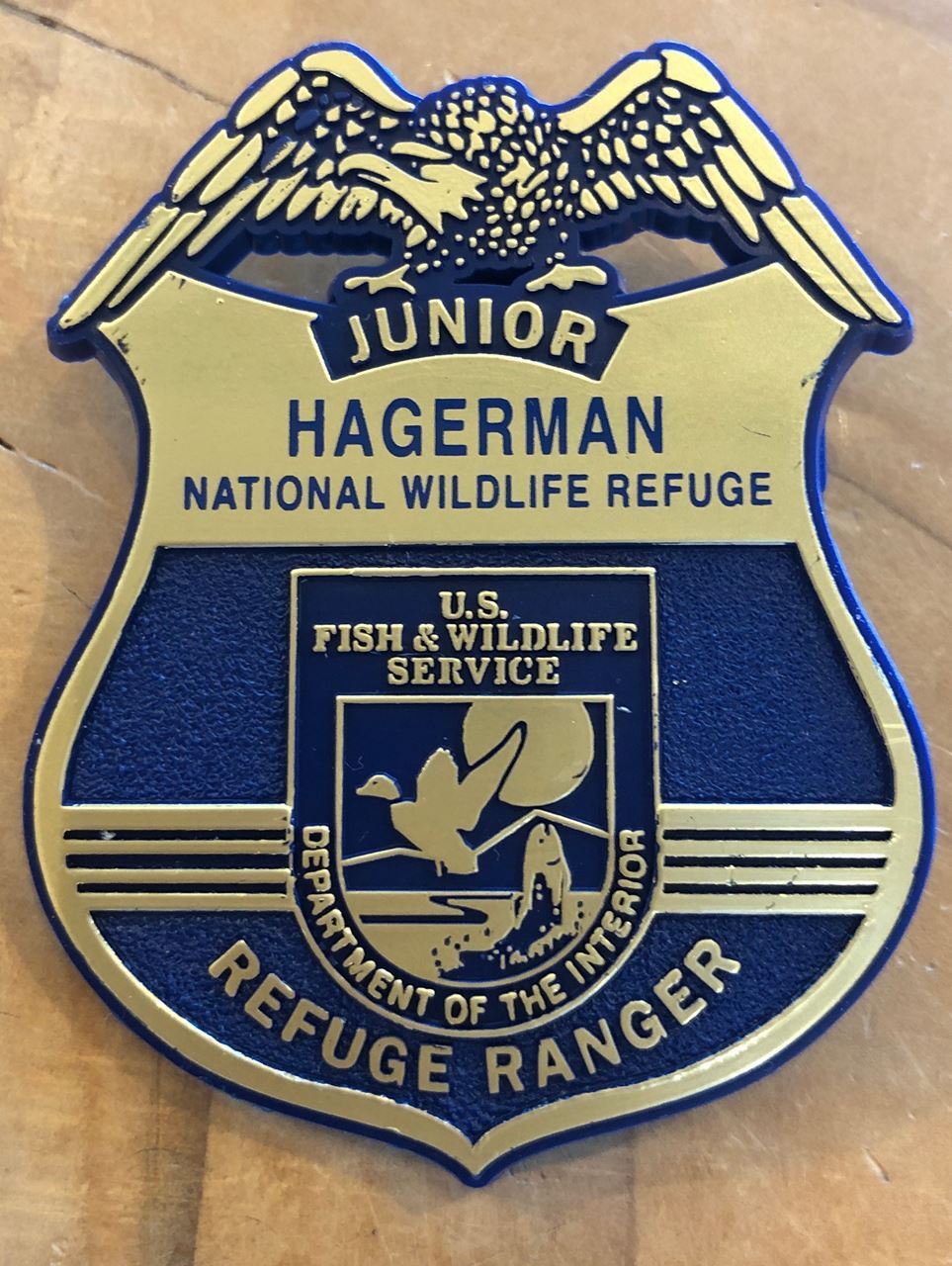
| The Junior Ranger Pledge As a Junior Ranger at Hagerman National Wildlife Refuge, I pledge to protect outdoor creatures small, big and huge. To keep the water, air and land clean. To make enjoying nature a routine. I will share my new skills with family and friends. When people and nature work together, everybody wins! |
|
Sponsors Enable the Friends to…
Join Today! Memberships available for $20 |
Come, Take a Tour on the Wildlife Explorer! Come join us for a ride on the Wildlife Explorer! Our new and beautiful tram is available for ninety-minute tours of Hagerman every Saturday and Sunday at 2:00 PM, weather permitting. Our tours are as varied as our drivers. Each tram driver has her/his approach to the tour: you may learn about wildlife, birds, habitat, refuge history, photography, you name it! To paraphrase, “a Wildlife Explorer tour at Hagerman is like a box of chocolates, you never know what you’re going to get.” But you know it’s going to be good! Come see us! Lots of stops for bird-watching and photography. |
Group Tram Tour Interested in becoming a Tram Driver? Inquire today! info@friendsofhagerman.org |
Register for a Tram Tour Today! |
Sunrise at the Little Sit by Laurie Sheppard | Photo by Cathy Van Bebber |
Meet Jack and the Bird Census Team and learn how to identify the birds of North Texas while enjoying the beautiful sunrise over Lake Texoma! Modeled after Cornell's national "Big Sit" event, a group of dedicated birders invite you to join them at sunrise to conduct a bird count as multiple species fly to the water and the surrounding land to feed. Leaders will bring spotting scopes and will provide tips for identification of the many species you will see. This event lasts a couple of hours, but all are welcome to come and go as they please. Participants are advised to bring a chair, binoculars and water. The First Saturday of every month, beginning 30 minutes before sunrise. |
Location: H Pad, Sadler, Texas 76264 (H Pad is in Sadler, but it is part of the refuge) GPS Coordinates: 33.734961, -96.780582
|
|

Dr. Wayne Meyer, Ornithologist and Jack Chiles, Master Naturalist will lead our Early Birding event, weather permitting. Bring binoculars or borrow ours. Meet at the Visitor Center and return in time for the Second Saturday program. |
Please Register (Optional) so we may inform you via email of unforseen changes/cancellations.
|
Do You Like to Work Outside? The Refuge Needs You! |
It takes a lot of people to have a beautiful garden! The Wednesday Garden Team Love to work with native plants and meet other gardeners? Come and help us add plants, weed and mulch our beautiful butterfly garden. Garden Team volunteers get first dibs on thinned native plants as well as access to seeds and cuttings for propagation. Gardeners meet on most Wednesdays, but times vary. Contact Us to subscribe to the volunteer garden team weekly email. Provide own tools and gloves. Minimum age 18, or 16 if accompanied by parent/volunteer. |
Mowing and Refuge Beautification: The Work Crew Do you enjoy working outside, mowing, sprucing up hiking trails, trimming and removing brush and general cleanup? Show your love for nature by joining the Outdoor Crew at Hagerman National Wildlife Refuge. Outdoor Crew volunteers meet on the First Tuesday and Fourth Saturday of every month. Contact Us for exact times, dates and other details about joining the volunteer Work Crew. Scouts welcome! |
Visitor Center Volunteers Needed! |
Do you enjoy meeting all kinds of people from all over the world, and like-minded people in our area? If yes, consider joining our team of Visitor Center Volunteers. You will greet refuge guests, distribute maps and other refuge information, and make sales in the gift shop. Shifts available every day of the week: Monday through Saturday 9 AM to 12:30 PM and 12:30 to 4:00 PM, Sunday 1:00 to 5:00 PM. Training is provided. Contact Us if interested. |
|
| Thank You To Our Contributors: Jack Chiles, Adam Graham, Tom Judd, Cindy Steele, Steve Treadway, Kathy Whaley Refuge Manager: Kathy Whaley Acting Deputy Refuge Manager: Mary Maddux Visitor Services Manager: Spencer Beard Friends of Hagerman NWR Foundation 6465 Refuge Road, Sherman, TX 75092 Phone: 903-786-2826 Join us on Facebook: |

Search for any word--do not use quotes for phrases |
6465 Refuge Road Sherman, TX 75092
|



Kroger: Stop by the customer service desk at Kroger and link your Kroger Card to the Friends of Hagerman: the Friends will get rewards for every dollar you spend, at no cost to you.
Please add info@friendsofhagerman.org to your contacts to ensure delivery of registration confirmations, account information and the Featherless Flyer
See you at the refuge!